

Virtual Reality Vs Augmented Reality…
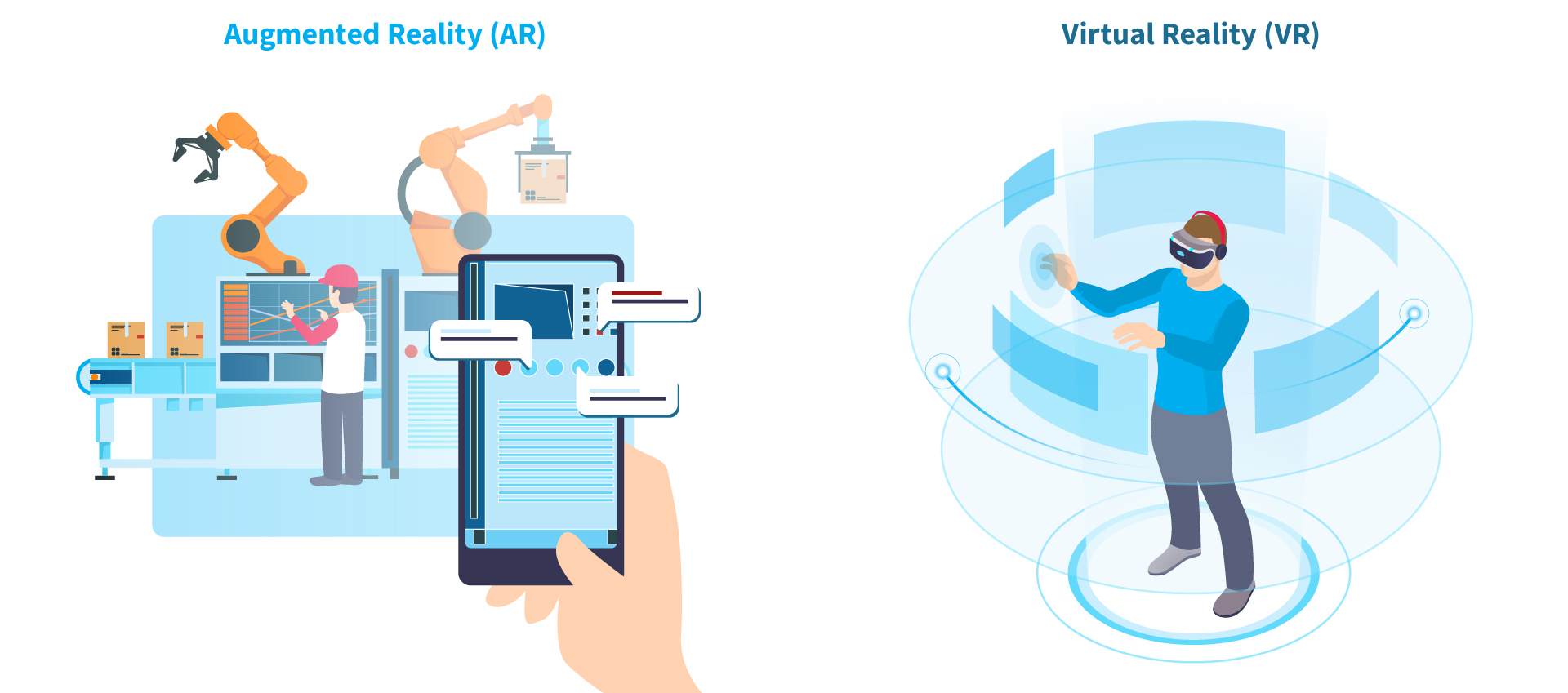
VR and AR Undeniably, there is a significant amount of hype around AR and VR, but as a marketer, how can you use this hype to make your marketing strategy even better?
Virtual reality (VR) is a computer-generated, interactive, and immersive environment where users can be transported to a new world. It’s an extremely powerful tool for brand development and marketing because it can take your brand and your customer’s experience to a new level. When used properly, VR can take your brand’s message to the next level.
When you think about VR, you may think about the “futuristic” or “out of this world” worlds that we’ve seen in movies, television shows, and video games. When it comes to VR marketing, however, the most effective VR experiences can take place right in the here and now.
Virtual reality has already had a significant impact on our lives, and its influence is only growing.
VR????

Since then, however, VR has come a long way, and there are a number of VR games that are nothing like The Matrix.
In fact, there are a lot of great VR games that don’t involve “virtual reality” at all. Many of them are called “augmented reality” games because they use the technology of augmented reality to enhance a user’s experience. Augmented reality (AR) is similar to virtual reality (VR), but it differs in a couple of important ways.
In VR, the user is completely immersed in a computer-generated environment. In AR, the user is still in the real world, but he or she is wearing a device that lets the user see the real world and computer-generated objects overlaid on top of it.
In VR, you’re the user. In AR, you’re the observer.
Why is this important? Well, it’s easy to understand why we want to be immersed in a VR world.
Further, virtual reality has been used for social and psychological purposes, such as therapy, and in telepresence, the ability to see and interact with others from a distance.
VR Virtual reality is often used as a type of augmented reality, in which the real world is augmented by computer-generated objects. Virtual reality can also be used in place of, or in addition to, the real world. In such cases, virtual reality provides a completely alternate world that the user interacts with. The line between virtual reality and augmented reality is sometimes blurred, however.
Virtual reality has a long history, dating back to the 1970s. A virtual reality system is one that completely surrounds the user and prevents him or her from seeing the real world. The term “virtual reality” was coined by Ivan Sutherland in 1968, who used it to describe a system of stereoscopic displays that allows the user to interact with virtual objects.
VR Virtual reality is an interactive 3D environment, created by a computer, which can be controlled by a user. A virtual reality headset allows the user to interact with the virtual environment.
Moreover, it’s not yet clear how people will use VR, and how it will be adopted into everyday life. But there is no doubt that VR will have a huge impact on people’s lives.
It’s interesting to note that VR has been around for decades, but it’s only recently that it’s become a mass-market product. Even in the late 1980s, there were several companies producing VR headsets, such as Virtuality and the Oculus Rift, but it wasn’t until the early 2000s that VR finally gained the traction that it has today. It’s been predicted that VR will be used in at least 30 percent of the entertainment industry by 2025. VR headsets have the potential to change the way people interact with each other and with their surroundings, but it’s not yet clear what kind of impact it will have.
The rise of VR is also interesting because it parallels the rise of augmented reality (AR).
AR…??????

AR, In this case, a mobile device serves as a viewer and an AR device serves as a toy or game.
AR ,The use of AR is growing rapidly. According to a report from Juniper Research, AR will be a $43 billion market by 2021, and this is expected to grow to $68 billion by 2025. This growth is attributed to the fact that AR is easier to use than VR and is more affordable than VR. However, AR is still in its early stages, and the first wave of AR products and services is expected to be small, but significant.
The use of AR in retail
The use of AR in retail is starting to grow. AR technology is being used by retailers to provide customers with information about the product they are viewing. The use of AR in retail is expected to grow as the technology is used to provide information about the product being viewed, the availability of that product, and to allow the customer to interact with the product.
To conclude, augmented reality is the combination of real-world images and computer-generated virtual images.
How AR and VR Work????

VR and AR The technology of augmented reality and virtual reality have come a long way since the first smartphone was released in the year 2000. However, the basic principle of combining the real world with virtual reality remains the same. It uses a computer-generated image that is then projected over the real world.
VR is a bit more complex than AR, but both are often used together. Augmented reality is used to enhance the real world, whereas virtual reality replaces it entirely.
How AR and VR are Different????????

VR and AR There are some differences between AR and VR. One is that AR overlays virtual images in the real world, while VR replaces the real world with virtual images. Another is that AR is projected over the real world, while VR is projected over the user’s field of vision. The third difference is that AR uses a smartphone or headset, while VR uses a computer-generated image.
In addition to the differences, AR and VR are used in different industries.
Using VR in Marketing Campaigns: How to Use Virtual Reality
Virtual reality (VR) has become a buzzword in the marketing industry. If you’re not familiar with VR, it’s basically a computer-generated 3D simulation that can give you a new perspective on the world around you.
Virtual reality is a great way to bring the world of your brand to life in a unique way. Here are some of the ways in which you can use VR in your marketing campaigns.
How to Use VR in Marketing Campaigns
What is VR?
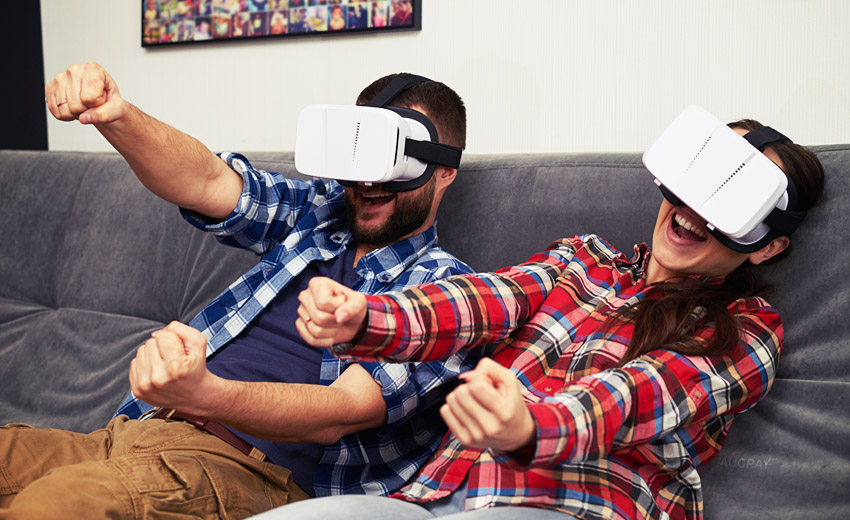
Virtual reality is a 3D simulation that gives you a new perspective on the world around you. You can experience the world around you in 360 degrees.
You can experience things that you would have never experienced otherwise. For example, you can experience a concert from the front row or be on the field of a football match.
VR can be used to give you a different perspective on your products and services.
Although the virtual world is very lifelike, the furniture items themselves are not real. They are simply placeholders that can be moved around in the virtual room.

The IKEA Place experience can be viewed at ikea.com/place. IKEA has been at the forefront of virtual and augmented reality for years. The company first released a VR experience called “3D Home” in 2017 that lets users virtually walk around their own homes in 3D. IKEA’s CEO Jesper Brodin explained that “this technology gives people a new way to look at their homes, and how to improve them.” The company also offers an augmented reality app called “3D Home” that allows users to virtually walk around their homes in 3D. IKEA has released a range of VR products over the years, including a VR-enabled shopping cart that allows users to virtually try on clothes and other items before buying them.
Companies such as IKEA are seeing great value in the new technology. They are using VR and AR to make their products more immersive and compelling.
Using AR for Marketing: How Augmented Reality Helps Marketers Improve Sales
It’s not just a matter of being “cool” anymore. It’s about engaging customers and getting them to understand and connect with your brand.
According to a recent report by Gartner, “By 2018, the AR market will grow to $20.2 billion and AR will be a core technology for digital businesses.”
So how can augmented reality help you engage with your customers? First, let’s look at the main benefits of using AR for marketing. How Augmented Reality Can Help Marketers Improve Sales and ROI
Augmented Reality: A Marketing Technology with Massive Potential
The potential of augmented reality is huge. It’s a technology that can be used to make brands more personal, increase customer engagement, and generate leads. The fact that the technology is still in its infancy makes it all the more exciting.
For the same reason that self-service kiosks have been such a success for airlines, self-service kiosks are also a natural fit for the hospitality industry. Marriott, for example, has deployed self-service kiosks at its resorts in Florida and Hawaii.
But kiosks can also be deployed for more strategic purposes. For example, they can be used to enhance or augment the customer experience in a variety of ways.
Case in point: the UK’s National Health Service. In 2009, the NHS developed a kiosk-based solution to allow patients to scan their own medical records, check their immunization records, and order prescriptions. The kiosks were designed to be patient-friendly, with a “touch-free” interface, so they were also easy for parents to use. The kiosks were also linked to an online service to allow patients to make changes to their records.
In the United States, several companies are also exploring the use of kiosks to enhance the customer experience in the healthcare sector. For the same reason that many companies are making VR training available to employees, they are also offering AR training. If you’re a business owner and you’re thinking about adding AR to your next big event, it’s time to start thinking about how it will help your business. And when it comes to virtual reality and augmented reality, what do you need to know to plan your AR strategy???
Conclusion:
Yet, as with any new technology, the risks are also enormous. These risks are two-fold:
(1) the ability of AR and VR to engage consumers, and
(2) the possibility of these technologies being used in a way that is unethical or exploitative.
We do not pretend to have all the answers, but we believe that there are ways to navigate these risks and capitalize on the opportunities. In the next few years, we expect to see companies adopt a new mindset about the use of AR and VR in marketing, and this will require a fundamental change in the way companies approach these technologies. We have identified three critical areas of change that we believe are necessary to succeed in this area:
(1) discovery,(2) usage, and(3) conversion
We believe that, as these areas are addressed, we will see a significant shift in the way companies use AR and VR in marketing.
Yet, there are also many challenges to be overcome. The technology itself is still being developed, and the way it will be used in the future remains unclear. Some people believe that AR and VR will become the future of shopping, whereas others argue that it will only become an interesting novelty for tourists
*Alexa*, Amazon’s digital assistant, will become the most important AR and VR company in 2020, with an estimated $3.3 billion in revenues in 2019. Apple’s ARKit will be the biggest AR/VR platform in 2020. *Google’s* ARCore is the first AR platform that will be widely used. *Microsoft’s* Windows Mixed Reality platform is the first VR platform to reach a mass audience. *Facebook’s* AR platform will be the most used in 2020.