

Robotic Process Automation(RPA)

Robotic Process Automation(RPA) the whole, means that software robots are faster, cheaper, and more reliable than people, making them a great fit for automating repetitive, manual tasks in the enterprise.
Robotic Process Automation(RPA) is a rapidly growing technology. According to a recent report from Forrester, the global market for RPA is expected to grow to $2.2 billion by 2022. This means that enterprises can make significant savings by automating manual tasks, and they can also reap the benefits of being able to scale RPA easily and quickly.
This is good news for anyone who has ever found themselves with a spreadsheet that needs to be completed, a form that needs to be submitted, or an invoice that needs to be processed. It also means that enterprises will increasingly be able to use RPA to improve the customer experience and reduce costs.
The first step to automating any process is understanding what it is, what it does, and how it can be automated.
Then, when it comes to upgrading and replacing legacy systems, the process can be as easy as updating the RPA system.
Robotic Process Automation,
Why should you automate workflows?
Robotic Process Automation(RPA) repetitive tasks and improving your productivity are the main reasons why you should automate workflows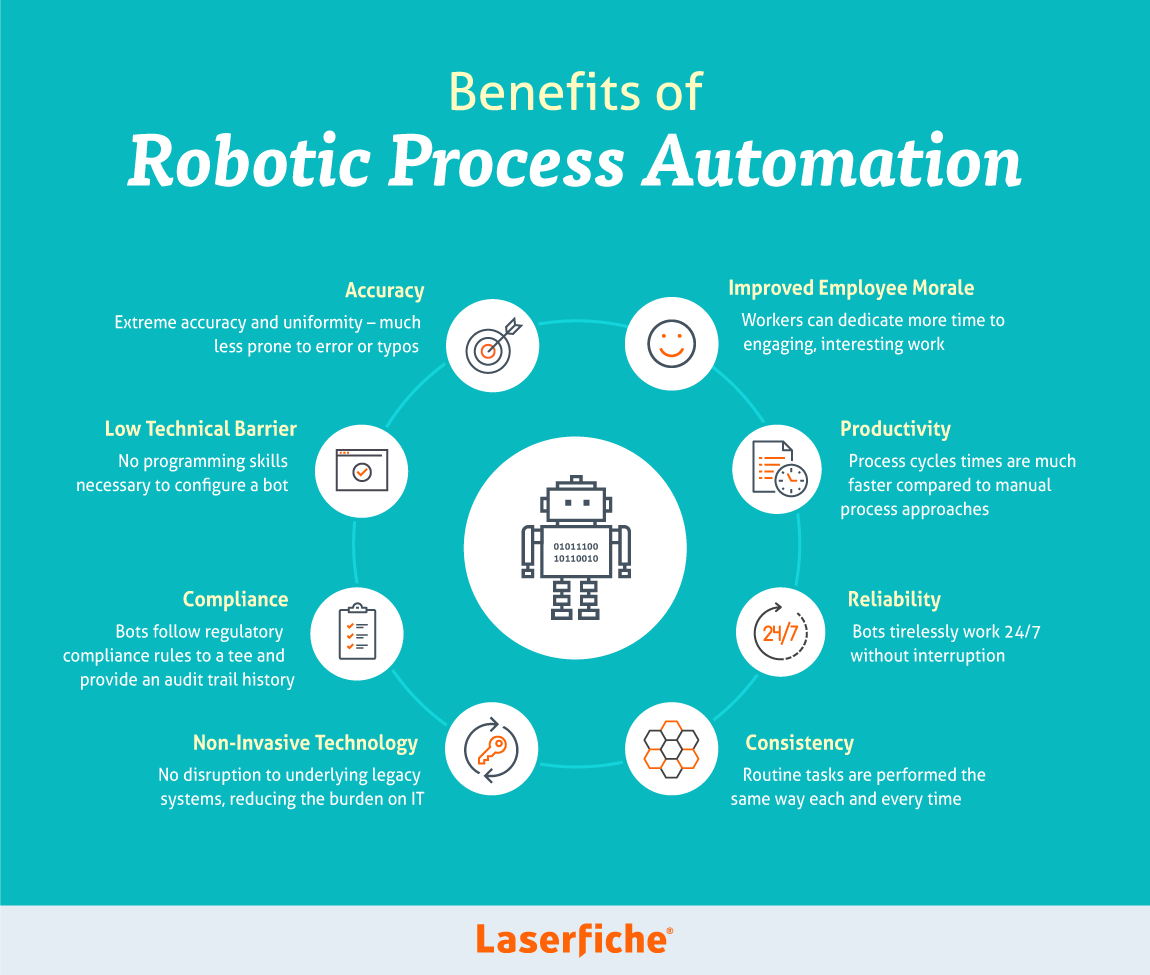
More efficient workflows enable you to spend more time on tasks that require your expertise, and less time on those that require your management skills. This can free up your time and allow you to focus on more meaningful work.
Robotic Process Automation(RPA) can also spend less time on routine tasks that aren’t as important to your organization. In fact, you can use that time to focus on your core business activities.
Robotic Process Automation(RPA)
The ROI of automating workflows?
Robotic process automation RPA helps your business by saving you time and money. The benefits of automating your business processes are:
Time savings. RPA reduces the time it takes to complete workflows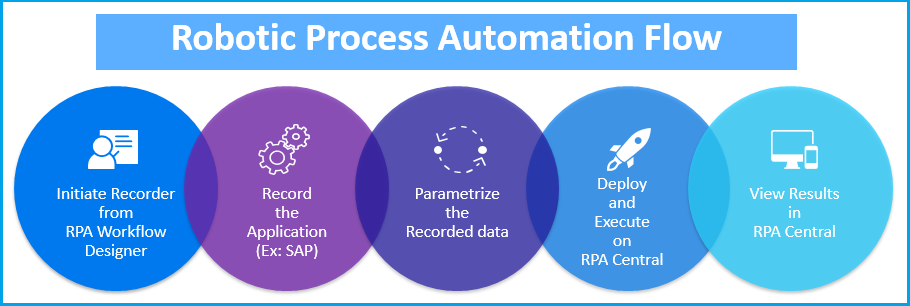
Definitely not an industry fad, RPA is the way of the future.
While the impact of RPA on businesses has been recognized for some time, a new wave of RPA adoption is gaining steam. For example, the number of enterprises using RPA for higher-value tasks is growing, with half of RPA users now using it for more than one application. Companies are also moving beyond simply automating mundane tasks and are using RPA to tackle higher-value problems.
In this post, we’ll explore how RPA is changing the way the world gets work done. We’ll share the real-world experiences of companies that are leveraging RPA to solve complex business problems. We’ll also highlight the challenges that enterprises are facing when deploying RPA and how they are overcoming them.
Robotic Process Automation RPA Operations…
Robotic Process Automation(RPA) there are the ever-expanding use cases. RPA’s applicability to areas such as compliance, legal, and customer service is growing, as is its ability to replace people in a wide range of repetitive tasks, including finance, accounting, marketing, sales, and operations.
And then there’s the sheer speed and scale of RPA adoption. The promise of RPA is to enable organizations to run their business more efficiently and effectively and accelerate the pace of business growth. That promise is already coming to fruition. The speed of adoption is growing at a phenomenal rate.
In this paper, we take a look at the state of RPA adoption, its drivers, and the future. The State of RPA Adoption, RPA is now in wide use. Its popularity is increasing, and its use cases are growing. RPA is enabling businesses to run more efficiently and accelerate growth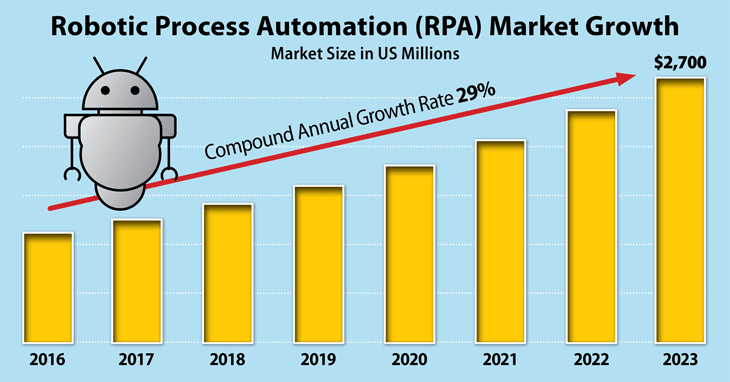
Robotic Process Automation(RPA) known as Agile CRM, Netsuite RPA is the most powerful enterprise-ready automation platform on the market. It is built on the Netsuite enterprise solution, which is trusted by more than 300,000 customers worldwide. Netsuite RPA is the most comprehensive and powerful enterprise-ready automation platform available today. It helps you automate more of your business processes in less time.
Netsuite RPA is the only platform that provides a complete end-to-end RPA solution. From the discovery of opportunities to building and managing a robotic process automation (RPA) program, Netsuite RPA enables you to build, manage, and automate an entire enterprise-wide capability. Netsuite RPA helps you build and manage an enterprise-wide RPA program that supports a variety of business processes.
Thus, RPA technology is rapidly becoming the standard for automating back-office tasks.
CEOs and CTOs are finding that RPA’s technology can improve employee productivity and increase customer satisfaction. In fact, in some industries, RPA is being used to deliver a superior customer experience by reducing wait times and improving customer service.
Robotic Process Automation(RPA) business impact is felt in every functional area, as it improves every process.
Robotic Process Automation best for…
We’ve found that RPA is best for processes that require the highest levels of accuracy, such as the following:
Robotic Process Automation(RPA) service and marketing, HR and payroll, Accounts payable and payable, Customer billing and collections, Customer support, Inventory management
In this case, AI is not just the ultimate ‘smart robot’; it’s a comprehensive automation system that extends to virtually all activities and processes and is driven by data-driven decisions.
AI is also making it possible to scientifically discover a complete range of automation opportunities and build a robust automation pipeline through RPA applications like process mining.
Conclusion
Robotic Process Automation(RPA) world’s leading AI experts are increasingly seeing that AI-powered automation is not only the best way to achieve the promise of AI but that it’s also a practical way to bring AI to the masses. This is the case because the use of AI in automation is far less expensive than traditional approaches, can be applied to a far broader range of business processes, and can be achieved in a shorter time frame.